Sous la Seine
Netflix • 2024
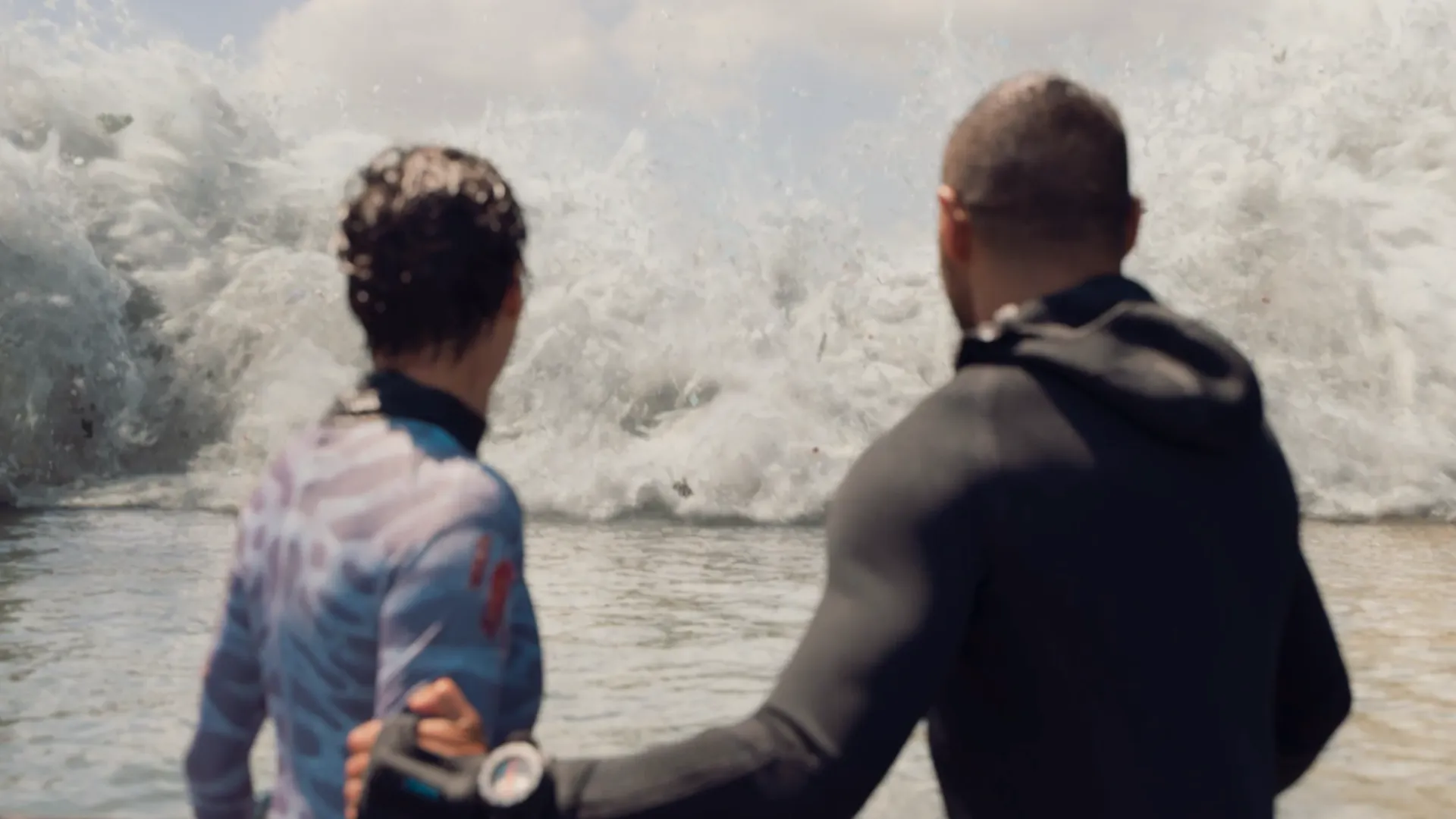
I was in charge of the creation of the tsunamis for the film Sous la Seine (Under Paris). Unlike a real tsunami, the one in the film is triggered by the detonation of old, forgotten bombs deep in the Seine, generating a shockwave that causes the flood. The director wanted the wave to behave in a similar way to the one in The Impossible.
Here is the result of my work as an FX Artist on the film.
Particular attention was given to the behavior and setup of the tsunami’s FLIP simulations. The subsequent passes could be computed very quickly, but their behavior was inevitably inherited from the initial FLIP simulation.
To have something to show quickly, I first ran a proxy simulation that produced a playblast in under two hours, giving me a reliable preview of the final high-quality simulation. The waves needed a “washing machine” behavior. In my first tests, I gave the wave an initial impulse, but it quickly calmed down and slided along the Seine without any disturbance. To recreate the turbulence the director was looking for, I ultimately set up invisible collision geometry beneath the water, which forced the wave to behave far more dynamically.
Once the FLIP pass was computed and approved by the supervisor, the rest of the setup followed easily. I used this cache to generate the mist and the resulting whitewater, relying on my own custom whitewater solver, as Houdini’s built-in one is far too heavy for what was required.
The debris pass was particularly interesting. For the smaller debris, I simply used the particles from the FLIP cache as a scatter source to instance the debris, orienting each piece according to the direction of its particle. For larger objects such as cars and trees, to avoid excessively long computation times, I used proxy geometry as soft bodies, carried by the velocity volume of my FLIP cache inside a Vellum Solver. After the simulation, the proxy meshes were replaced with the original meshes.